

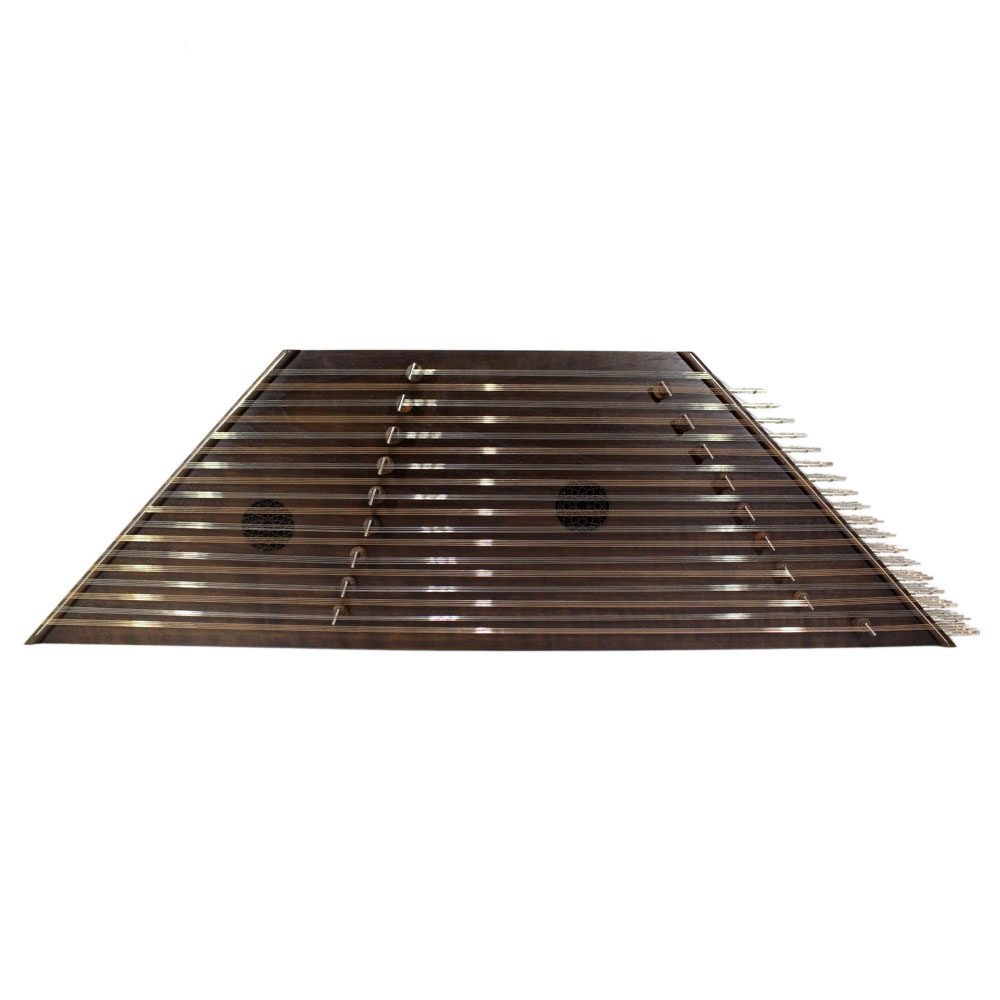

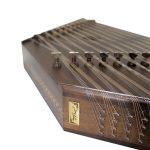
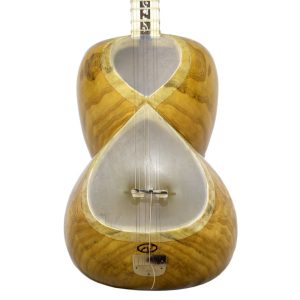
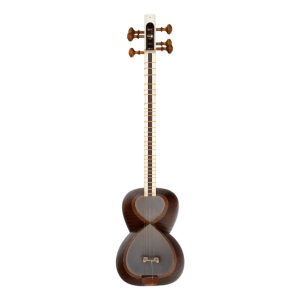
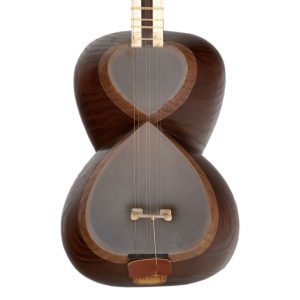
Mousavi’s special three-stamps Santur
The Iranian Santur: A Masterpiece of Persian Music (Featuring Mousavi’s Special Three-Stamps Santur)
Introduction
The Iranian Santur is one of the most elegant and influential instruments in Persian classical music. Known for its shimmering tone and rich harmonic texture, the Santur has shaped Persian musical culture for centuries. Among the many handcrafted models available today, the Mousavi’s Special Three-Stamps Santur stands out as a premium choice—designed for players who seek professional sound quality, fine craftsmanship, and exceptional resonance.
A Glimpse Into the History of the Santur
The Santur is a hammered dulcimer with ancient origins in Iran and Mesopotamia. Its presence in Persian art, poetry, and classical literature reflects its deep cultural roots. Over time, the Santur became one of the central instruments in:
- Radif performance
- Solo improvisation (Avaz)
- Classical ensembles
- Modern fusion and world-music compositions
Its ability to create both delicate melodies and rich harmonic layers has made it a cornerstone of Iranian music.
Structure and Materials of the Iranian Santur
A traditional Persian Santur features:
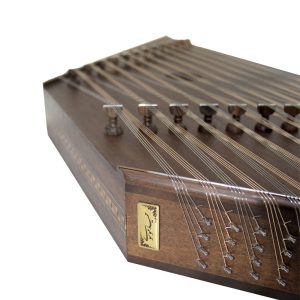
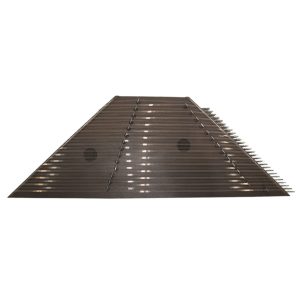
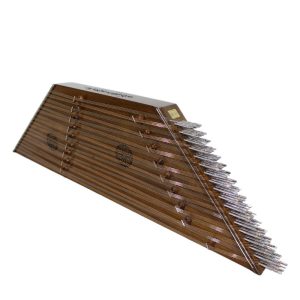
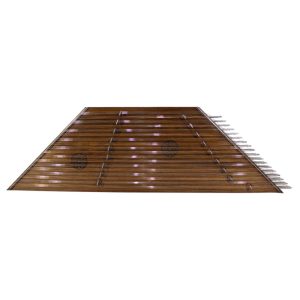
- A trapezoid-shaped wooden body
- Two sets of strings (yellow brass and white steel)
- Wooden bridges arranged in two rows
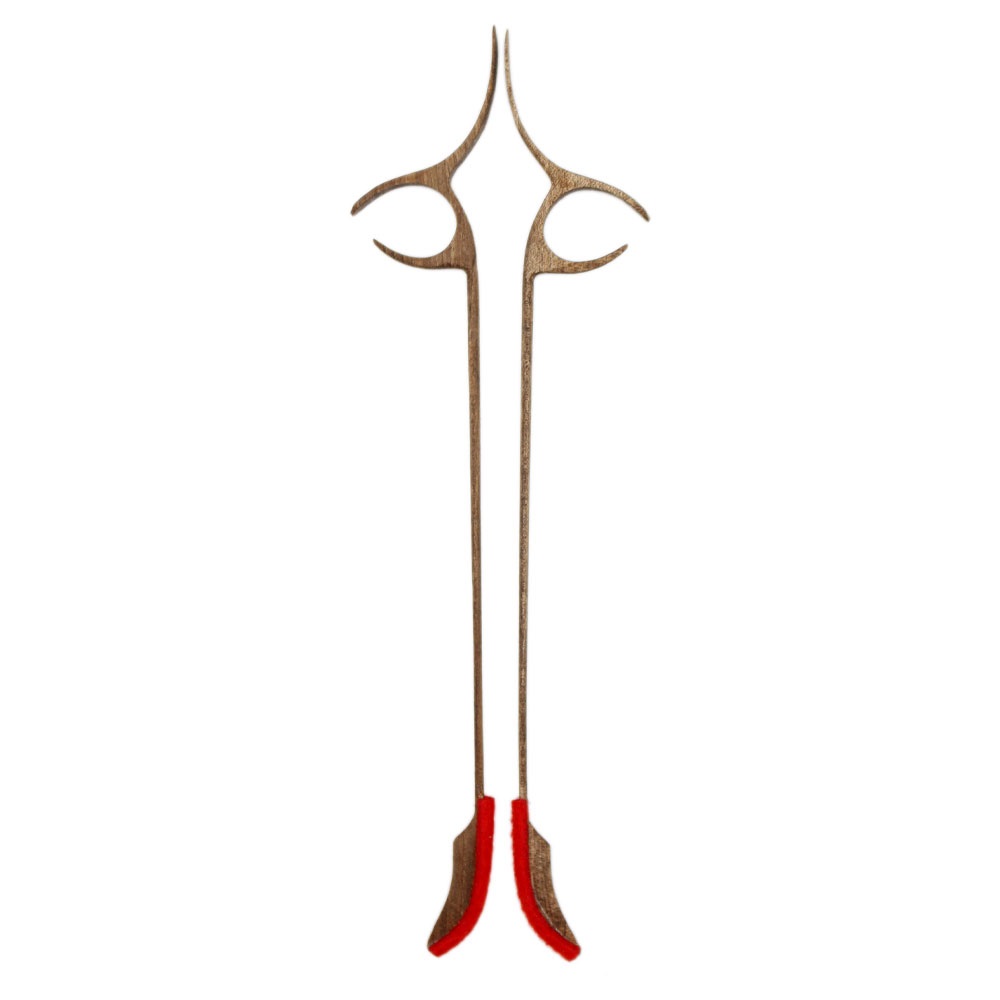
- Played with light wooden mallets called mezrab or mallet
High-quality Santurs are typically built from:
- Walnut wood for the body (for warmth and stability)
- Brass and steel strings for tonal contrast
- Maple or walnut bridges for clarity and sustain
The quality of wood, craftsmanship, and internal bracing all affect the Santur’s tone, tuning stability, and harmonic richness.
What Is a Three-Stamps Santur?
A Three-Stamps Santur carries three maker’s seals—a mark of authenticity and premium craftsmanship. These stamps signify:
- Verified identity of the maker
- High-grade materials
- Precision in construction
- Professional sound quality
- A certification of excellence recognized by the workshop
A three-stamp instrument is often preferred by advanced students, performers, and recording artists seeking superior tonal response.
Mousavi’s Special Three-Stamps Santur
The Mousavi workshop is known for producing finely crafted Santurs with a rich, balanced, and expressive tone. A Special Three-Stamps Santur by Mousavi typically offers:
- Superior resonance and sustain
- Balanced bass and treble response
- Stable tuning even during long practice sessions
- High-quality walnut body selected for optimal acoustic properties
- Elegant, traditional craftsmanship with precise finish and detailing
- Responsive bridges and clear note separation
These qualities make it suitable for both concert performance and professional recording environments.
Sound and Playing Characteristics
The Iranian Santur is admired for its:
- Crystal-clear highs
- Warm, expressive lows
- Natural reverb and shimmering overtones
- Ability to shift from soft, emotional passages to energetic rhythms
The Mousavi Special Three-Stamps model enhances these features through careful wood selection and precise tuning of internal braces.
The Santur in Modern Music
Despite its historical roots, the Santur remains highly relevant and is widely used in:
- Persian traditional and classical music
- World fusion and contemporary orchestration
- Film soundtracks and cultural performances
- Music conservatories and academic programs
Its versatility allows it to blend seamlessly with modern instruments while preserving its traditional identity.
Conclusion
The Iranian Santur is a timeless symbol of Persian artistry—combining elegance, emotional depth, and technical brilliance. The Mousavi’s Special Three-Stamps Santur represents one of the finest examples of this tradition, offering exceptional sound, premium craftsmanship, and professional-level performance. For musicians seeking a Santur that honors both heritage and quality, a three-stamp model by Mousavi is a truly outstanding choice.
Reviews
There are no reviews yet.