History of the Iranian Tar

History of the Iranian Tar: Origins, Evolution, and Cultural Significance
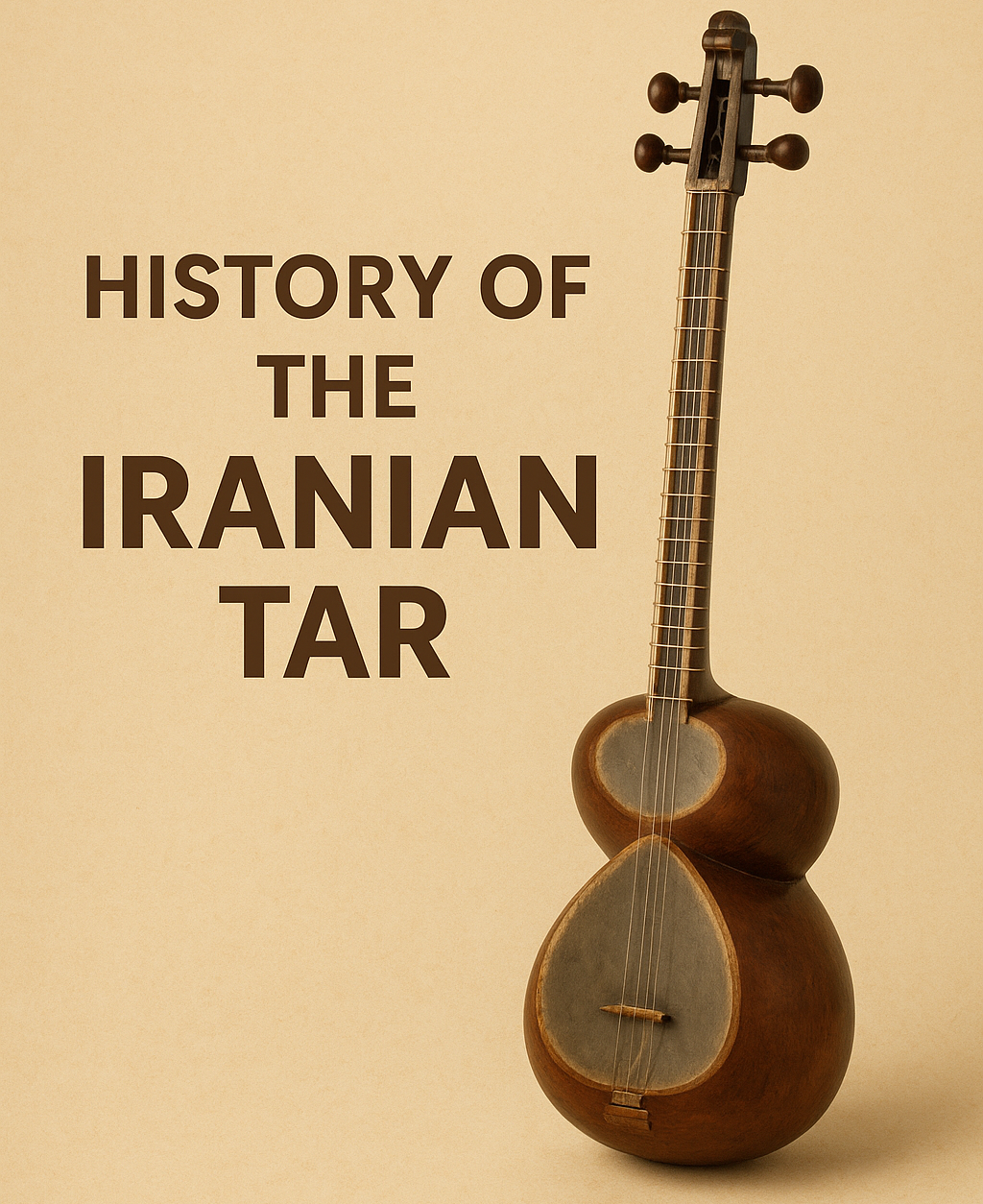
The Iranian Tar is one of the most iconic instruments in Persian music, known for its deep emotional resonance and unique double-bowl shape. As a central instrument in classical, folk, and contemporary Iranian music, the tar has a long and rich history that reflects the cultural evolution of Iran itself. This article explores the origins, development, structure, and cultural importance of the Iranian tar.
Origins of the Tar
The tar is believed to have originated in ancient Persia more than 2,000 years ago. Although its exact early form is still debated, evidence suggests that long-necked lutes similar to the tar existed during the Sassanian era (224–651 CE). These early instruments laid the foundation for the tar’s later development.
The word “tar” in Persian means “string,” and many Middle Eastern instruments share this root, such as the sitar, dotar, and setar. This linguistic connection highlights the tar’s influence on neighboring musical cultures.
Evolution Through the Centuries
Medieval and Post-Islamic Period
During the medieval Islamic era, Persian music flourished, and the tar evolved into a more sophisticated instrument. Music theorists like Farabi and Avicenna documented the science of sound and instruments, contributing to the tar’s theoretical foundation even if its design was still developing.
18th–19th Century: The Birth of the Modern Tar
The tar’s current form took shape in the 18th century, especially during the Qajar dynasty (1789–1925).
Key developments included:
- Transformation into a double-bowl resonator carved from mulberry wood
- Addition of a longer neck and improved tuning system
- Use of animal skin (usually lambskin) for the soundboard
- Standardization to six strings
By the late 19th century, the tar became the central instrument in Persian classical music. Renowned musicians such as Mirza Hossein-Qoli and Agha Ali-Akbar Farahani played major roles in defining the modern repertoire.
Construction and Design
The Iranian tar consists of several distinct parts:
1. Body (Bowl)
Carved from mulberry wood into a double-chambered shape, the body enhances resonance and projection.
2. Skin
The resonating face is covered with thin animal skin, which gives the tar its warm and expressive tone.
3. Neck
A long neck made from walnut wood features movable gut frets, allowing for microtones essential to Persian music.
4. Strings
The modern tar uses six strings arranged in three pairs:
- Bass pair
- Middle pair
- Treble pair
The strings are played with a small brass or bone plectrum covered with beeswax for flexibility.
The Tar in Persian Classical Music
The tar is a primary melodic instrument in Radif music, the traditional repertoire of Persian classical performance. Its tonal versatility allows performers to express:
- Delicate ornamentations
- Microtonal nuances
- Powerful rhythmic patterns
- Emotional improvisations (taqsim)
Tar masters like Ali-Akbar Shahnazi, Jalil Shahnaz, and Hossein Alizadeh greatly expanded its techniques and global reputation.
Regional Variations
While the Iranian tar is the most internationally recognized, variations of the instrument exist across the region:
- Caucasian Tar (Azerbaijan): Different body shape, 11 strings
- Armenian Tar: Similar to the Caucasian tar but tuned differently
- Tajik Tar: A hybrid influenced by Persian and Central Asian instrument traditions
These regional versions illustrate the tar’s cultural spread beyond Iran.
Cultural and Symbolic Significance
The tar represents more than just a musical instrument; it embodies Persian cultural identity. It has played a central role in:
- Court music of the Qajar era
- Modern orchestral compositions
- Traditional and folk gatherings
- Educational systems for Persian classical music
The tar is often associated with nostalgia, poetry, and spirituality, reflecting Iran’s deep musical heritage.
The Tar in Modern Times
Today, the tar continues to thrive both in Iran and globally. Contemporary musicians blend the tar with genres such as:
- Fusion
- Jazz
- Experimental music
- World music ensembles
Modern instrument makers have also introduced innovations such as:
- Carbon-fiber tars
- Synthetic skins
- Amplified and electric tars
These adaptations ensure the instrument remains relevant while preserving its traditional soul.
Conclusion
The Iranian tar is a powerful symbol of Persian artistic expression. With a history spanning millennia, it has evolved from an ancient lute into a sophisticated instrument essential to Iranian music. Its emotional depth, cultural importance, and technical versatility make it a timeless treasure in the world of musical heritage.
Whether used in traditional Radif performances or modern fusion projects, the tar continues to inspire musicians and audiences worldwide.