A Guide to Persian Musical Instruments

At Vahdati Music, we grew up with the sound of Persian instruments in our homes, classrooms, and concert halls. Today, we manufacture and export authentic Iranian instruments — from traditional tar, setar, and santur to tombak, daf, ney and modern handpans — to musicians, learners, and retailers around the world.
This guide is designed to help you get to know these instruments more closely: how they are built, how they are played, and what makes each one special in the sound world of Persian music.
A Guide to Persian Musical Instruments
Strings, Percussion, Winds & Modern Steel Instruments
Persian musical instruments form one of the richest sound worlds in global music. From the intimate whisper of the setar to the thunder of the daf and the meditative resonance of modern handpans, each instrument carries centuries of craftsmanship and culture.
This guide introduces the main families of Persian instruments and their key members, with a focus on how they are built, how they are played, and the musical roles they serve.
Table of Contents
- 1. Persian String Instruments
- 2. Persian Percussion Instruments
- 3. Persian Wind Instruments
- 4. Modern Iranian Handpans
- Conclusion
Persian String Instruments
Persian string instruments are at the heart of classical and folk music in Iran. They are mostly plucked or bowed and are designed to express the subtle nuances of Persian scales and ornamentation.
In this section:
- Tar
- Setar
- Santur
- Kamancheh
- Tanbur
You can also browse our full Persian String Instruments collection.
Tar – The Iconic Long-Necked Lute
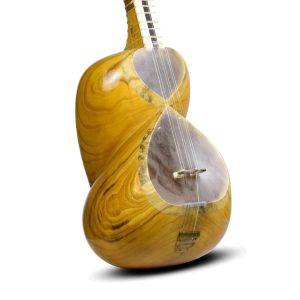
The tar is one of the central instruments of Persian classical music. Its name means “string,” and it has evolved into a distinctive double-bowl, long-necked lute.
Construction & materials
- Body carved from a solid block of hardwood (usually mulberry).
- Shaped into a double-chambered, hourglass-like form.
- Front covered with a thin stretched skin (traditionally lambskin) acting as a soundboard.
- Long neck fitted with movable frets (often gut or nylon), allowing microtonal intervals.
- Usually six metal strings arranged in three double courses, plus sometimes an extra bass string.
How it’s played & its sound
The tar is held horizontally across the chest and played with a small plectrum (mezrab), traditionally made of brass wrapped in felt or cloth. Players pluck rapid runs, trills, and subtle bends, using both right-hand articulation and left-hand vibrato.
Its sound is:
- Warm and resonant in the low register.
- Bright and penetrating in the upper register.
- Capable of both delicate lyrical phrases and powerful rhythmic passages.
In Persian ensembles, the tar often carries the main melody and is a principal vehicle for performing the radif, the classical repertoire.
Explore our Tar (Persian Long-Necked Lute) category.
Setar – The Intimate Four-String Lute
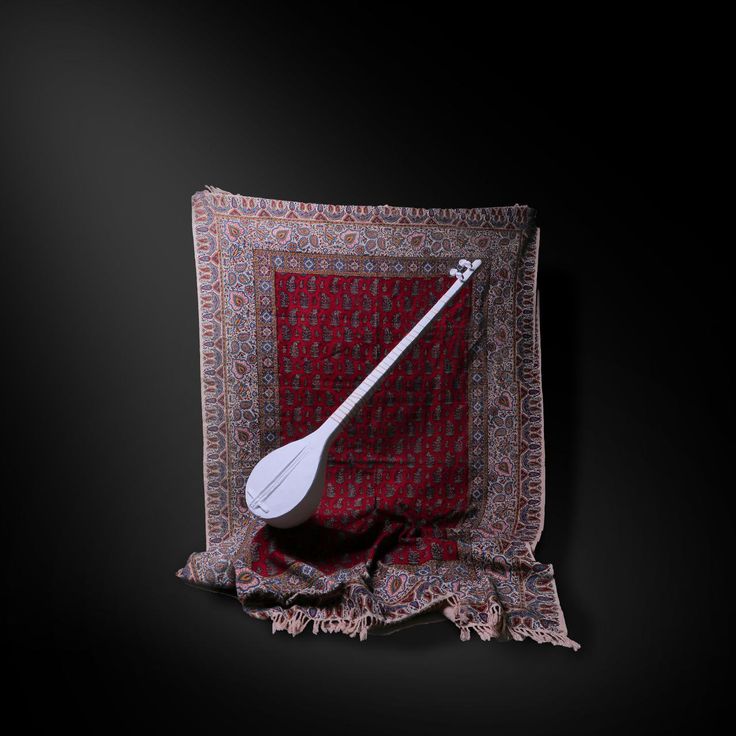
The setar is a small, delicate long-neck lute with a soft, introspective voice. Despite its name (“three strings”), it now has four metal strings.
Construction & materials
- Pear-shaped wooden body (mulberry or walnut).
- Thin wooden soundboard.
- Long narrow neck with numerous movable frets (usually 25–27), enabling very fine pitch steps.
- Four strings in different gauges, typically tuned to allow drones and melodic flexibility.
How it’s played & its sound
The setar is held like a small lute. Uniquely, it is plucked not with a pick but with the right index fingernail, which gives a gentle, slightly grainy articulation. Players combine:
- Delicate plucking patterns.
- Frequent slides and vibrato.
- Use of drones and ornaments characteristic of Persian music.
Its sound is:
- Quiet and intimate, ideal for small spaces.
- Bright but not harsh.
- Often described as “whispering” or “speaking” softly.
Browse our Setar (Persian Setar) instruments.
Santur – Trapezoidal Hammered Dulcimer
The santur (or santoor) is a hammered dulcimer that produces a shimmering cascade of notes.
Construction & materials
- Trapezoidal wooden box, usually walnut or similar hardwood.
- Two sets of metal strings stretched across the top:
- One side often brass or copper (warmer tone).
- The other side steel (brighter tone).
- Strings rest on rows of small wooden bridges, usually giving dozens of separate courses (often around 72 strings in total, grouped in unisons).
How it’s played & its sound
The santur is placed horizontally on a stand or player’s lap. The musician uses two light wooden mallets (mezrab) held between fingers to strike the strings.
Its sound:
- Clear and bell-like in the treble.
- Warm and resonant in lower notes.
- Capable of rapid arpeggios, ornaments, and intricate rhythmic patterns.
The santur often leads or shares the melodic role in classical ensembles. Its layout allows fast scale runs and chordal textures that are central to many Persian pieces.
See our Santur / Santoorselection.
Kamancheh – Bowed Spike Fiddle
The kamancheh is a bowed string instrument sometimes called a “spike fiddle,” related historically to the rebab and an ancestor of some modern bowed instruments.
Construction & materials
- Small, round resonating body made of wood or sometimes gourd.
- Front covered with stretched animal skin, forming a drum-like soundtable.
- Long neck with tuning pegs projecting from the sides.
- A metal end-pin (the “spike”) extends from the bottom and rests on the player’s knee or the floor.
- Typically three or four strings (modern instruments often have four tuned like a violin).
How it’s played & its sound
The kamancheh is held vertically, supported by the spike. The player uses a short bow, moving it across the strings while the left hand fingers notes on the neck.
Its sound:
- Expressive and vocal-like, capable of wide vibrato.
- Nasal yet warm, with a strong singing quality.
- Excellent for lyrical melodies and emotional solos.
The kamancheh appears in classical, folk, and regional styles across Iran and neighboring countries and is recognized internationally as one of the key bowed instruments of the region.
Discover our Kamancheh / Kamancha instruments.
Persian Percussion Instruments
Rhythm in Persian music is often driven by a small family of hand drums and frame drums. They range from the highly virtuosic tombak to the powerful, ringing daf.
In this section:
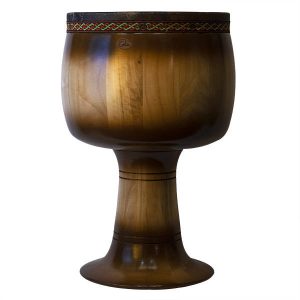
- Tombak (Zarb)
- Daf
- Dayereh
You can view them together in our Persian Percussion Instruments collection.
Tombak (Zarb) – Principal Goblet Drum
The tombak (also written tonbak or zarb) is a goblet-shaped drum and is the main classical drum of Iran.
Construction & materials
- Carved from a solid block of hardwood (often walnut).
- Goblet shape with a broad head and narrow base.
- Top covered with stretched goatskin or sheepskin.
- Usually no metal hardware; the skin is glued or tacked directly to the shell.
How it’s played & its sound
The tombak is held at an angle across the player’s lap. The right and left hands use:
- Finger strikes for sharp tones.
- Palm and finger-heel for bass tones.
- Rolls, snaps, and complex combinations that create very detailed rhythms.
Its sound:
- Deep, round bass from the center.
- Crisp, high “tak” sounds near the edge.
- Capable of extremely intricate textures and solo performance.
The tombak is both an accompanying instrument and a solo art in its own right in Persian classical music.
Browse our Tombak / Tonbak (Zarb) drums.
Daf – Large Frame Drum with Internal Rings
The daf is a large frame drum associated with both classical and folk music, and often with spiritual and Sufi practices.
Construction & materials
- Large circular wooden frame, typically 50–55 cm in diameter.
- One side covered with a thin skin (goat or synthetic).
- Inside the frame, metal rings or chains hang loosely, creating a jingling sound when the drum is played.
How it’s played & its sound
The daf is held upright and supported by both hands. Players use:
- Palm and finger strikes for deep and mid-range tones.
- Shaking and rotating motions to activate the internal rings.
- Finger rolls and subtle taps for ornaments.
Its sound:
- Deep, booming fundamental from the skin.
- Continuous shimmer from the metal rings.
- Capable of both slow, trance-like rhythms and fast, driving patterns.
The daf is central in Sufi rituals, Kurdish music, and many regional traditions, often playing a powerful, trance-inducing role.
See our Daf (Persian Frame Drum) range.
Dayereh – Medium Frame Drum with Jingles
The dayereh (or dayere) is a medium-sized frame drum similar in concept to a tambourine.
Construction & materials
- Wooden frame, smaller than a daf.
- Skin head (animal or synthetic) stretched over one side.
- Metal jingles or small cymbals mounted in slots around the frame.
How it’s played & its sound
It is held in one hand and played with:
- Finger taps and slaps on the head.
- Shaking motions to activate the jingles.
- Thumb strokes and finger rolls for rhythmic complexity.
Its sound:
- Bright, lively jingles.
- Clear mid-range drum tone.
- Ideal for dance rhythms and celebrations.
The dayereh appears widely in Iranian and Central Asian folk music, especially in festive settings.
Discover our Dayereh (Ring Frame Drum) instruments.
Persian Wind Instruments
Persian wind instruments add breath, color, and a distinctive timbre to the musical palette. They range from quiet, meditative flutes to loud outdoor shawms.
Key instruments include:
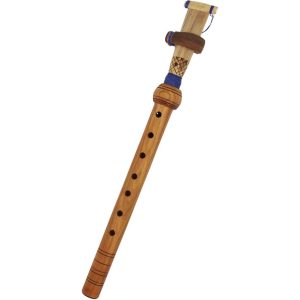
- Ney
- Balaban (similar to duduk)
- Sorna (zurna-type shawm)
Find them together in our Persian Wind Instruments collection.
Ney – End-Blown Reed Flute
The ney is a simple-looking but technically demanding end-blown flute made from reed.
Construction & materials
- Hollow reed or cane tube.
- Typically six finger holes (five front, one back).
- Open end used as the mouthpiece; no separate mouthpiece attached.
- Sometimes reinforced with bindings or rings.
How it’s played & its sound
The player blows across the top edge of the ney at a diagonal angle, using a special embouchure on one side of the mouth. Advanced players produce:
- Multiple octaves using changes in air pressure and embouchure.
- Smooth glissandi between notes.
- Subtle vibrato and breathy ornaments.
Its sound:
- Breath-infused, slightly airy.
- Capable of very expressive, melancholic melodies.
- Strongly associated with Sufi and classical Persian music.
The ney is often described as the “voice of longing” in Persian culture and accompanies poetry and spiritual texts.
Explore our Ney (Persian Reed Flute) page.
Balaban – Soft, Double-Reed Cylindrical Pipe
The balaban is a double-reed instrument with a mellow, melancholic timbre, closely related to the Armenian duduk.
Construction & materials
- Cylindrical wooden body (apricot, walnut, or similar hardwood).
- Seven or eight finger holes on the front, one thumb hole at the back.
- A flat double reed that plugs into the top.
- Sometimes a small barrel or collar to help support the lips.
How it’s played & its sound
The player blows through the reed and uses fingerings to produce notes, often employing:
- Gentle vibrato.
- Slides between pitches.
- Circular breathing (for advanced players) to sustain long phrases.
Its sound:
- Warm, reedy, and voice-like.
- Soft volume, ideal for intimate settings.
- Associated with deeply expressive melodies and laments.
The balaban is used in Azerbaijani, Iranian, and related regional music traditions.
See our Balaban / Duduk-type instruments.
Sorna – Loud Conical Shawm for Outdoors
The sorna (or zurna) is a conical double-reed horn designed for outdoor use and strong projection.
Construction & materials
- Conical wooden body.
- Flaring bell at the end (often with a metal ring or bell).
- Several finger holes on the front and a thumb hole.
- Small but powerful double reed fitted into a metal staple, sometimes with a lip support disc.
How it’s played & its sound
The sorna is played with a firm embouchure and powerful air stream. Musicians typically:
- Use high breath pressure to project the sound.
- Employ ornamentation and fast runs for festive melodies.
- Perform in combination with large drums (like dohol) in outdoor settings.
Its sound:
- Very loud and bright.
- Penetrating, with a strong, celebratory character.
- Perfect for weddings, processions, and open-air dances.
The sorna is a traditional instrument for festivities and ceremonies in many Iranian regions.
Discover our Sorna / Zurna instruments.
Modern Iranian Handpans & Steel Tongue Drums
In recent years, Iranian makers have also embraced handpans and steel drums. Though not traditional in origin, they pair beautifully with Persian music and are increasingly crafted in Iran with great skill.
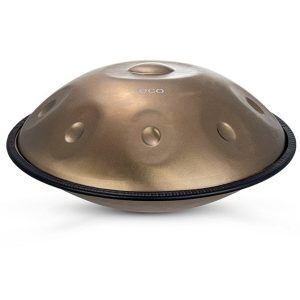
These are usually classified by material, because material strongly affects sound and durability:
- Nitrided steel
- Stainless steel
You can browse them in our Handpans & Steel Drums category.
Nitrided Steel Handpans
Nitrided steel is regular steel that has undergone a heat and nitrogen treatment to harden the surface and enhance rust resistance.
Characteristics
- Slightly harder surface, improving tuning stability and strength.
- Typically a bright, clear sound with good projection.
- Sustain that is present but a bit shorter than stainless, giving a slightly more percussive attack.
Players often choose nitrided pans for a balance between warmth, clarity, and durability.
Discover our Nitrided Steel Handpans.
Stainless Steel Handpans
Stainless steel is a rust-resistant alloy that provides distinct sonic and practical traits.
Characteristics
- Very high resistance to corrosion (no regular oiling needed).
- Long, lush sustain – notes can ring for a long time.
- Generally a softer, warmer tone compared with nitrided steel.
Stainless handpans are especially popular for meditative playing, sound healing, and recording, where long resonance is desired.
Discover our Stainless Steel Handpans.
Conclusion
Persian instruments form a complete sound world:
- String instruments like tar, setar, santur, kamancheh, and tanbur bring melodic richness and centuries of tradition.
- Percussion instruments like tombak, daf, and dayereh provide intricate rhythms and powerful energy.
- Wind instruments such as ney, balaban, and sorna add breath, color, and emotional nuance.
- Modern handpans and steel tongue drums, now also crafted in Iran, connect ancient musical sensibilities with contemporary soundscapes.
Understanding how each instrument is built, how it is played, and how it sounds is the first step to appreciating the depth of Persian music. Whether you are a musician, a student of world music, a listener, or a curious newcomer, exploring these instruments opens a window into a living tradition that continues to evolve while honoring its roots.
About Vahdati Music
Vahdati Music is based in Iran and specializes in crafting and supplying authentic Persian musical instruments for players, teachers, academies, and retailers worldwide. Every instrument is selected or built with attention to tone, stability, and traditional character.
If you would like to explore instruments such as tar, setar, santur, tombak, daf, ney, kamancheh or Iranian-made handpans and steel tongue drums, you can start with our main instrument catalog or visit each product category directly.
Whether you are starting your journey into Persian music or expanding an existing collection, we’re here to help you find the right instruments and keep this living tradition sounding beautiful for years to come.